Skip to content

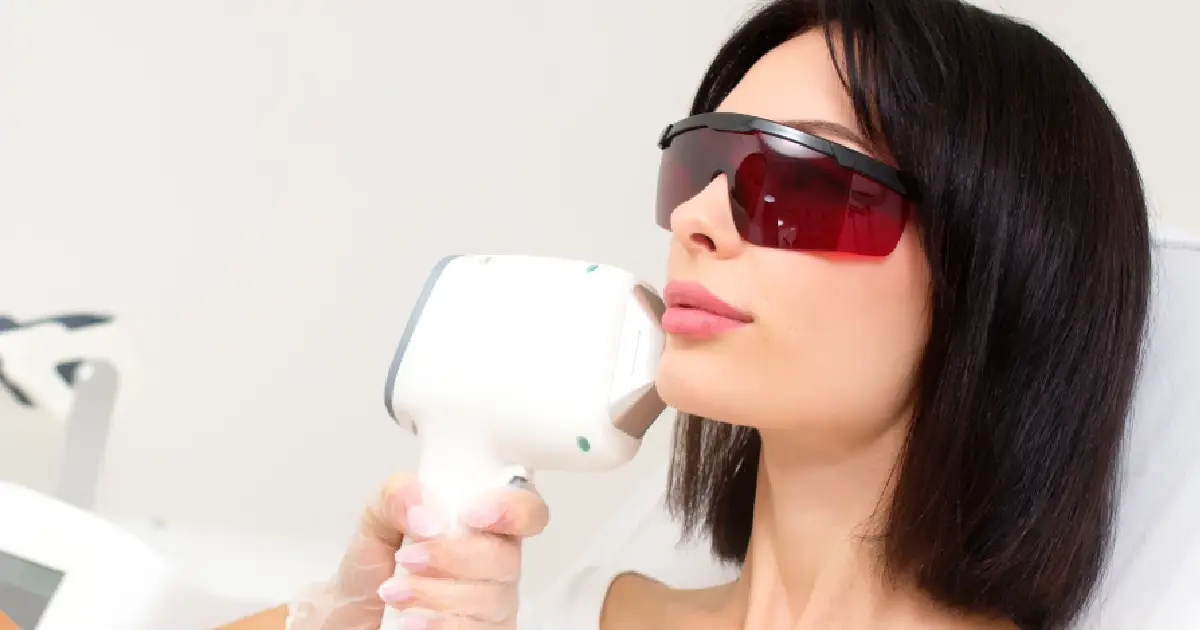
Table of Contents
A great summer always leaves evidence. The proof usually arrives later in the year, but once the tan fades, what is left behind is a scatter of brown spots, patchy tone, and a flush across the cheeks that was not there in May.
Most of that is correctable. Sun damaged skin responds well to treatment, particularly a light-based sun-damaged skin treatment that addresses pigment and redness in the same visit.
How do you fix sun-damaged skin after summer?
Most sun damage is treated with light-based therapy, such as BroadBand Light, which targets brown spots, redness, and uneven skin tone in a single session. Fall and winter are the practical time to do it, because treated skin needs consistent sun protection while it clears.
What Summer Sun Actually Does To Your Skin
Sun exposure changes your skin in three separate ways, and only one is visible while it happens. UV light triggers melanocytes, the pigment-producing cells in the skin, to overproduce pigment. That extra pigment does not surface evenly. It clusters, which is how a fairly even complexion in June becomes freckled and patchy by September.
Underneath that, UV breaks down collagen and elastin, the proteins responsible for firmness and bounce. Sun damage shows up vascularly as well. Broken capillaries around the nose, persistent redness across the cheeks, and small red dots on the chest are all sun damage, though few people label them that way.
Why Sun Damage Shows Up After Summer
Pigment takes weeks to travel. Melanin produced during a July weekend on the water migrates upward through the skin gradually, so the spots that catch your eye in early fall were set in motion months earlier.
A summer tan also works as camouflage. While the surrounding skin is darker, uneven pigment blends in. As the tan fades through September and October, the contrast sharpens, and the spots look worse even though nothing new has happened.
Fall is also when correction becomes practical. Shorter days and lower UV levels around the Bay give treated skin a much better chance of staying protected while it recovers.
Which Signs Of Sun Damage Can Be Corrected And Which Cannot
Not every sign of sun exposure responds the same way, and honest expectations produce better outcomes. Here is how the concerns generally sort out:
- Responds well: sun spots, UV-driven freckling, diffuse redness, broken capillaries, dullness, and mild surface texture irregularity.
- Improves gradually: fine lines, enlarged pores, and early laxity, all of which depend on collagen stimulation and take several months to show change.
- Needs a different approach: deep static lines, significant laxity, and precancerous lesions such as actinic keratoses.
One rule holds regardless of the concern. Any new spot, changing, asymmetric, or slow to heal should be evaluated by a physician before any cosmetic treatment. Sun damage repair starts with knowing exactly what you are treating.
How BBL Treats Sun Damage At The Source
BroadBand Light Therapy for sun damage works by delivering pulses of light energy that specific targets in the skin absorb. Pigment absorbs it. So does hemoglobin, the protein in red blood cells. That selectivity is what allows one device to address two different problems in the same appointment.
When pigment absorbs light, treated spots darken over the next day or two, lift toward the surface, and flake away over roughly one to two weeks. Vascular lesions respond in parallel, with redness diffusing as treated vessels close and the body clears them.
The third effect happens deeper. Controlled heat in the dermis prompts new collagen production, which is where texture and firmness improve gradually over the months that follow. At Euna Aesthetics, we use BroadBand Light in Annapolis, MD, on the face, neck, chest, and hands, the areas that take the most incidental sun on the water and behind the wheel.
Is BBL Right For Your Skin Type?
Candidacy depends on skin tone, recent sun exposure, and medical history. Because BBL works by targeting pigment, the contrast between your background skin tone and the treated spots affects both settings and safety.
- Fitzpatrick skin type. Providers use the Fitzpatrick scale, a classification from I (very fair) to VI (very dark), to judge suitability and select settings. Richer skin tones call for careful assessment, and in some cases a different treatment is the safer path.
- Recent sun exposure. An active tan is a reason to wait, since treating recently exposed skin increases the risk of uneven pigmentation.
- Medications and skin condition. Photosensitizing medications, active breakouts, cold sore history, and recent isotretinoin use all affect timing.
Your provider reviews each of these before anything is scheduled.
What the Correction Process Looks Like
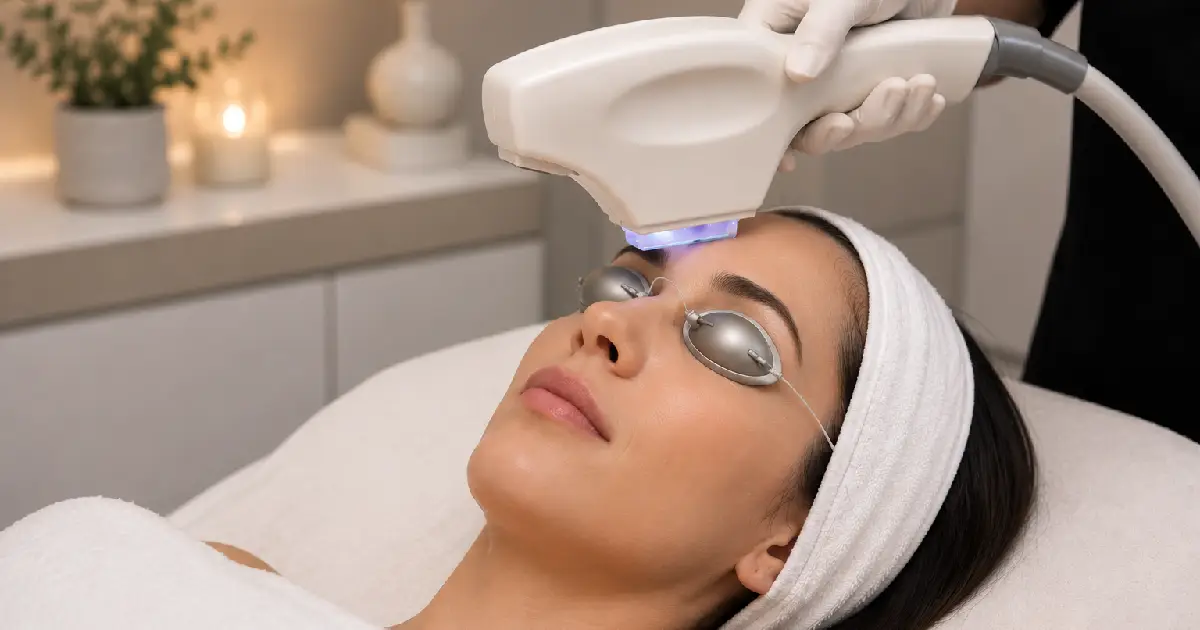
A single BBL session runs about 20 to 30 minutes for a full face. You wear protective eyewear, a cool gel is applied to the skin, and each pulse feels like a warm snap, like a rubber band flick. Most patients find it tolerable without topical numbing, though it is available.
Afterward, expect mild redness and warmth for a few hours, comparable to light windburn. Treated brown spots darken into what patients often describe as coffee grounds, then flake off over one to two weeks, and normal activity resumes the same day for most people.
Most patients notice visible change within a few weeks, and a series of sessions typically produces the most complete skin rejuvenation. Results vary depending on the extent of accumulated damage and how consistently sun protection is used afterward.
How To Protect The Result Through Fall And Winter
Correction holds only as long as you protect it. Post-summer skincare carries the maintenance work between sessions:
- Broad-spectrum SPF 30 or higher every day, including overcast days and long drives, since UVA passes through car windows.
- A vitamin C serum in the morning to help limit new pigment formation.
- Niacinamide to support the skin barrier and even out tone.
- A retinoid at night where your skin tolerates it, which supports cell turnover and collagen over time.
For most patients, one or two sessions a year keeps results steady, usually scheduled in fall or winter. Skincare alone manages sun damaged skin well, though it rarely corrects pigment that is already established. The pairing is what holds.
Fall Is The Right Time To Address What Summer Left Behind
Sun damage accumulates quietly across years of Annapolis summers, and it responds far better to a deliberate plan than to waiting it out. Our team at Euna Aesthetics assesses your skin type, walks you through what is realistically correctable, and builds a treatment plan around your pigmentation and redness patterns.
Restore sun-damaged skin with a personalized treatment plan. Schedule a consultation, and we can talk through how BBL could benefit your skin this season.