Skip to content

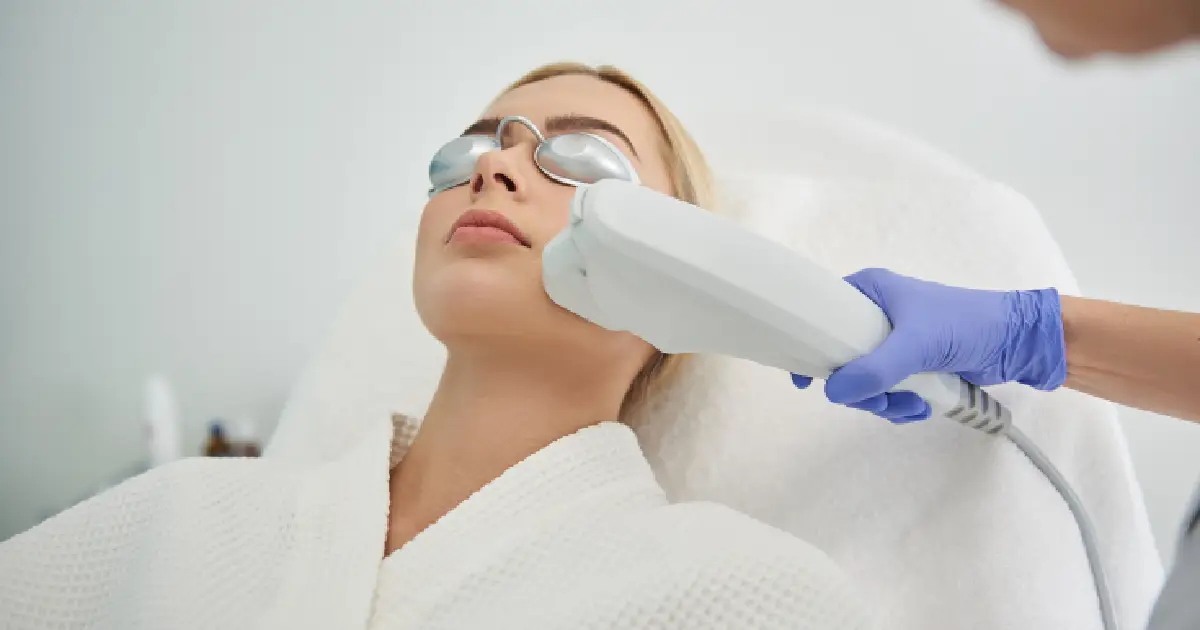
Table of Contents
Most patients who ask us about lasers arrive with the same hesitation. They like the idea of clearer, more even skin; they have read enough to know resurfacing can deliver it, and they are not willing to spend a week at home flaking to get there. That hesitation explains why MOXI laser treatment has become one of the most requested options on our laser menu at Euna Aesthetics.
How is MOXI different from traditional laser treatments?
MOXI is a non-ablative fractional laser, which means it treats the skin without removing the surface layer, so recovery is typically a few days of redness and rough texture rather than a week or more of peeling. Deeper resurfacing lasers reach further into the skin and can correct more in one session, though they require considerably more downtime and more careful aftercare.
What Are “Traditional Lasers”?
When patients say traditional lasers, they are usually describing one of two groups.
- Fully ablative resurfacing, such as CO2 and erbium systems, which remove the outer layer of skin so new tissue forms in its place.
- Deeper fractional resurfacing, which includes the Halo laser treatment, Tunable Resurfacing Laser (TRL), MicroLaser Peel, and ProFractional treatments.
The difference between ablative and fractional comes down to coverage. Ablative lasers treat the full surface of an area. A fractional laser treatment creates microscopic columns of treated tissue and leaves healthy skin between them, and that untreated skin speeds healing considerably.
What ties the whole group together is energy and depth. More energy delivered deeper means more correction per session, along with more swelling, more visible healing, and a longer stretch of careful aftercare. For deep acne scarring, etched lines, and years of accumulated sun damage, that depth is often exactly what the skin needs.
How Does MOXI Work Differently?
MOXI is a non-ablative fractional laser built around a 1927 nm thulium wavelength. It heats micro-columns within the skin and leaves the outer surface intact, which is the single mechanical fact behind every trade-off that follows.
Because the surface layer stays in place, the skin barrier is far less disrupted during healing. Patients tend to feel comfortable sooner, and the window where skin needs protection is shorter.
The 1927 nm wavelength has a specific affinity for water in the upper layers of the skin, where most visible pigment irregularity lives. That is why tone and clarity tend to respond well, and why MOXI laser for sun damage and surface discoloration is one of its most common uses. MOXI laser for fine lines can soften early surface texture as collagen remodeling occurs over the following weeks.
MOXI also runs at a lower energy level by design. Results build gradually across a series of sessions, which is one of the MOXI laser benefits patients mention most: steady progress they can fit into a normal schedule.
What Is The Downtime Difference Between MOXI and Traditional Lasers?
Downtime is the reason most patients give when they choose MOXI, and the comparison is worth stating plainly.
- After MOXI: redness similar to a mild sunburn, followed by a fine sandpaper texture and tiny darkened dots called MENDs as the treated columns clear. Most patients feel comfortable in public within one to three days.
- After deeper fractional or ablative resurfacing: several days to more than a week of visible peeling, swelling, and strict sun avoidance, with closer monitoring during healing.
A MOXI treatment can often be scheduled around a normal work week without rearranging meetings, weekend plans, or a sailing weekend on the Chesapeake. Deeper resurfacing usually needs a protected stretch on the calendar.
Recovery varies with treatment settings, the area treated, and individual healing, and your provider will give you a realistic window before you book. Good MOXI aftercare stays simple: gentle cleansing, a bland moisturizer, and daily broad-spectrum SPF while the skin finishes clearing.
What Is Each Option Genuinely Better At?
MOXI tends to suit uneven tone, dullness, early sun damage, and overall texture refinement. It is a common starting point for first-time laser patients and for anyone maintaining results year-round.
Deeper resurfacing is generally the stronger choice for etched lines, acne scarring, and more advanced photodamage, where meaningful change requires reaching further into the dermis.
The pattern we see most often is using MOXI for maintenance and prevention, with deeper lasers for correction. The two are not exclusive. Many patients complete a deeper resurfacing session once, then hold their results with lighter treatments over the following years.
Skin Tone and Candidacy Considerations
Candidacy for any laser begins with skin tone. Providers use the Fitzpatrick skin type scale, a classification from I (very fair) to VI (very dark), to judge which device and which settings are appropriate.
The concern behind that assessment is post-inflammatory hyperpigmentation, the darkening that can follow heat or inflammation in skin with more active melanocytes. Device selection and energy settings are chosen specifically to reduce that risk.
MOXI’s lower-energy, non-ablative mechanism gives providers more room to treat a wider range of skin tones, though candidacy is always assessed individually rather than assumed.
Timing factors into eligibility as well. Active skin infection, recent isotretinoin use, pregnancy, and recent sun exposure or tanning all affect when treatment can safely proceed.
How Do You Decide Which One Fits Your Skin?
Three questions usually settle the decision.
- How much correction does your skin actually need? Surface tone and early texture point one direction. Deeper scarring or etched lines point another.
- How much recovery time is realistic for you right now? A series of lighter sessions and one deeper session are different commitments, spread differently across your calendar.
- Are you maintaining or repairing? Prevention and upkeep favor gentler, repeatable treatments.
In person, a provider evaluates skin type, the depth of your concern, any history of pigmentation changes, and your sun exposure habits before recommending anything. If you are comparing options, our overview of MOXI in Annapolis, MD, and our wider range of laser resurfacing options covers what each device addresses.
Let’s Find the Right Laser for Your Skin
There is no single correct laser, only the one that suits your skin, your concern, and your calendar. Our providers at Euna Aesthetics will look at your skin honestly and tell you which option fits, including when a deeper treatment would serve you better. Book a MOXI Laser Treatment Consultation at our Annapolis office, and we will map out a realistic plan together.